
In the Kitchen with Meredith: Fava Beans
When I first started at SLO Veg, I remember hearing and seeing the words “fava beans” all the time, and feeling stumped as I had never heard of such a thing. Usually, I am pretty shameless about asking questions, especially in a new job, but somehow I have made it this far not knowing what fava beans are. If I don’t know what they are, there’s no doubt in my mind that some of our subscribers are also stumped on all things fava bean. So, let’s dissect these together! Go ahead and grab your recipe notes, this could be a wild ride!
What to Expect
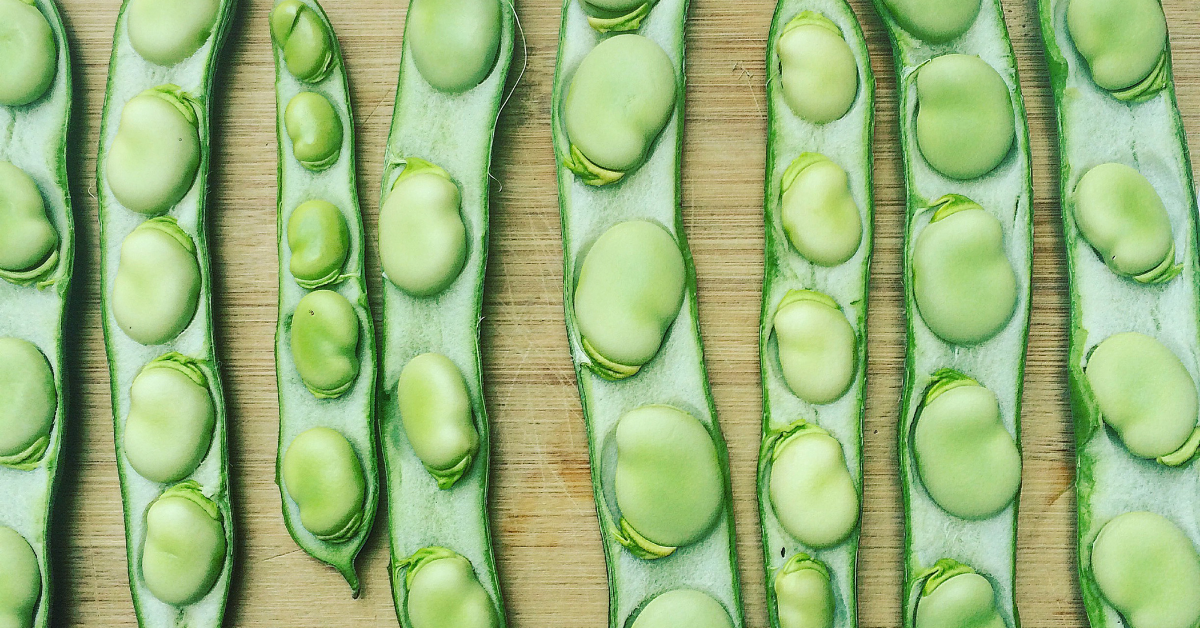
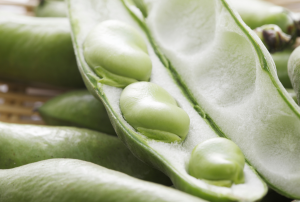
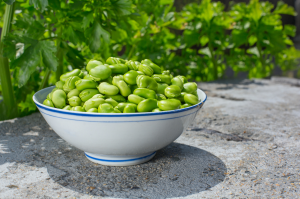
Fava beans grow in pods much like the English shelling peas that we’ve previously offered in weeks past. These beans are large and flat with a translucent skin that is typically removed before eating. We’ll get into the cooking process later where I’ll show you the easiest way to remove that pesky skin.
Flavor wise, many describe these beans as nutty and buttery and faintly grassy- the ultimate ode to spring. They harbor a soft, starchy texture when cooked, perfect for sauces and mashes. All deliciousness aside, these beans are also packed with nutrients: just 100 grams of favas contains 25 grams of protein. They’re also rich in phosphorus, magnesium, and iron as well as B vitamins so… yeah, I’ll go for seconds on these bad boys any day.
Quick History
Fava Beans are one of the oldest known cultivated plants, dating all the way back to 6000 BCE. Throughout their long history, they’ve been widely adopted and utilized in Asian, South American, African, Middle Eastern and European cuisines! Part of why they’re so popular is because of their versatility, these beans are so easy to add some extra “umph” to any recipe or dish. These are also a really useful “cover crop” that farmers use to maintain the integrity of their soil year round, and prevent agricultural runoff from emptying into our oceans. Delish and sustainable?! Yes way.
How to Prepare
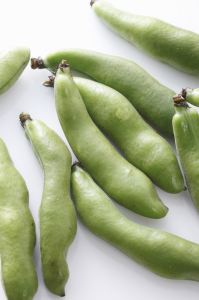
Blanching is the best route to go if you want to remove that skin from the bean itself. To do this, you’ll first want to shell the beans by using a paring knife and slicing along the vein that runs up the beanstalk. If you’re anything like me, you may ditch the paring knife and go for a more natural and impatient approach of eagerly ripping the skin and clawing the beans out.
Next, you’ll want to remove the beans from their shells, the amount of bean per stalk varies, but there’s usually about 3-12 in each pod. At this point, the beans still have that thin, translucent skin on them.
Take a medium sized saucepan and fill it about halfway with water. I like to add some salt to the water during this step to complement the fava flavor. Transfer to the stove and bring to a boil.
Once the water is boiling, add the shelled beans. If you’re wanting to add these to a dish that will be cooked further (like a stew), cook for only a minute or so. If you want to get that creamy, buttery texture in one go, leave them in the water for 3-5 minutes. Depending on the size of the beans, they may take a little longer to cook, so be patient and always taste test!
While the beans are cooking, I usually use this opportunity to run around the kitchen to put together an ice bath as quickly as I can. To do this, I take a large bowl and fill it with the contents of an entire ice tray, and some water to cover the ice. I also like to nestle a mesh strainer into the water and ice mixture so that I can easily retrieve whatever I’m blanching in one swift swoop.
After your cook time is up, strain the water from the pot and immediately transfer the beans to the ice bath. Let these hang out in there for about 5 minutes to thoroughly cool.
When they’ve cooled completely, pick up that strainer and get shellin’! The best way to do this is using the edge of your nail to slightly open up the casing and then pressing slightly with your fingertips to pop off the entirety of the shell.
Now you’re all set to add fava beans to a recipe of your choosing! Check out the recipes below to serve favas to your fam and friends!
Za’atar Grilled Chicken Wings with Fava Bean Feta Dip
Arugula and Fava Bean Crostini
Halibut on Mashed Fava Beans with Mint

Thank you so much for the tutorial! I shelled the beans, then was a little dismayed to realize I had to take the outer coating off! I started peeling it off, but your method of boiling them sounds much easier. Glad I didn’t throw them away now especially after reading about how much protein, B vitamins, and magnesium they have…. All things we are trying to increase in our diet.
Yay! We’re so glad our tutorial helped :)
Hello Meredith,
Just wanted to thank you for this great article all about Fava beans and how to prepare them for cooking and enjoying!
Thanks, Laura